
What is Hydroponic Forage?
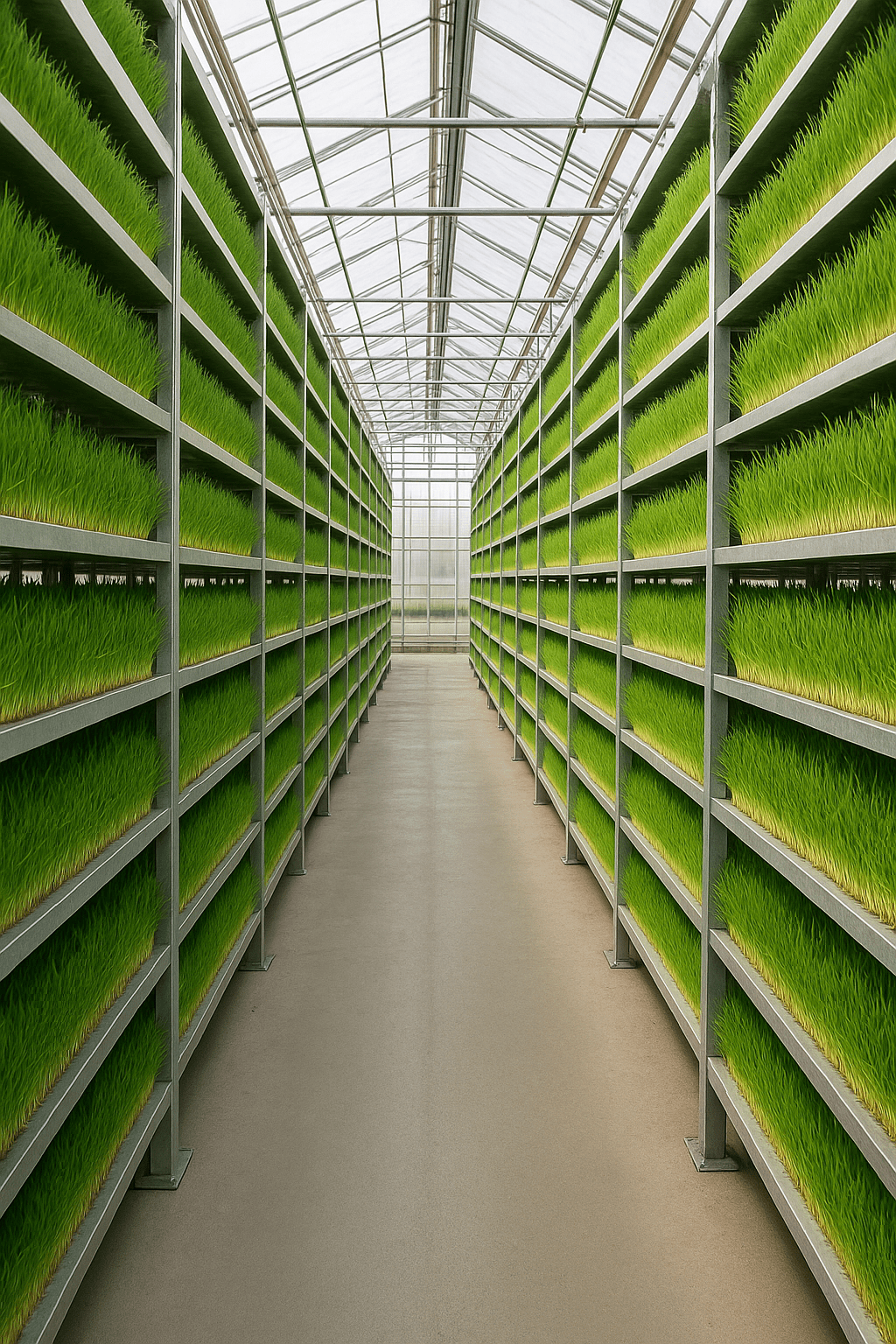
Hydroponic forage is a form of green fodder cultivated in a soil-less environment. The most common crops are barley, wheatgrass, and maize, which are sprouted in trays under controlled humidity, light, and temperature.
Within 6 to 8 days, seeds transform into a dense mat of green biomass. This biomass contains:
Highly digestible carbohydrates and proteins
Chlorophyll and live enzymes
Vitamins A, B-complex, C, and E
Up to 80% moisture — aiding hydration and gut health
What is Hydroponic Feed?
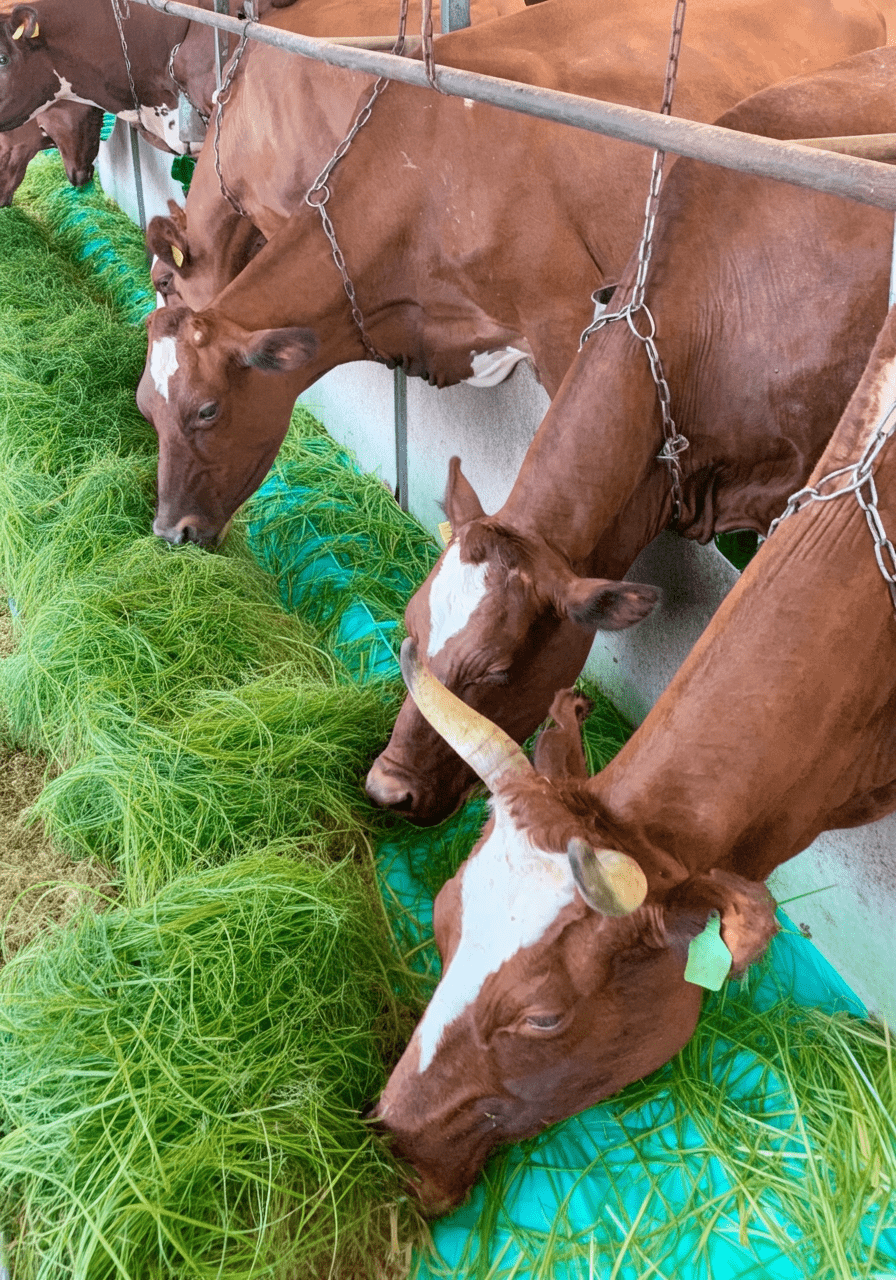
Hydroponic feed is fresh green fodder grown without soil, in a closed-loop system. It's 100% natural, free of chemicals, and harvested daily.
**Advantages:**
- Excellent digestibility
- High moisture content (ideal for dry rations)
- Reduces risk of colic and digestive issues
- Improves coat, hooves, and vitality
- Always fresh – even in winter
Agrivoltaics: combining crops and solar power
Rojer Moore
CEO DirectorQ nsectetur adipiscing elit, sed do eiusm onsectetur adipiscing elit, eiusm od tempor ut labore.
Consectetur adipiscing elit, sed do eiusm onsectetur adipiscing elit, sed do eiusm od tempor ut labore sed adipiscing do eiusm od tempor ut sed do eiusm.
Consectetur adipiscing elit, sed do eiusm onsectetur adipiscing elit, sed do od tempor ut labore.
Consectetur adipiscing elit, sed do eiusm onsectetur adipiscing elit, sed do eiusm od tempor.
What is Hydroponic Feed?
Hydroponic forage is green feed grown without soil in a controlled environment. Barley, wheat, or other grains are sprouted and harvested within 6–8 days, delivering a fresh and nutrient-dense supplement for animals.
What is Hydroponic Forage?
Hydroponic forage is green feed grown without soil in a controlled environment. Barley, wheat, or other grains are sprouted and harvested within 6–8 days, delivering a fresh and nutrient-dense supplement for animals.
The best 6 qualities of a good farm manager
Want to see it in action? Book a guided tour of our vertical farming unit and learn how sustainable forage is produced.